
International Repetitive Strain Injury Awareness Day: Protecting Your Body at Work and Beyond
Saturday, February 28, is International Repetitive Strain Injury Awareness Day. Every day, millions of people type, lift, scroll, grip, drive, and repeat the same motions over and over again. While these tasks seem harmless, repetitive movements can place ongoing stress on muscles, tendons, and nerves. And sometimes, they lead to painful and limiting conditions known as repetitive strain injuries (RSIs).
International Repetitive Strain Injury Awareness Day is a reminder that small habits can have a big impact on long-term health. The good news: many repetitive strain injuries are preventable with awareness, simple adjustments, and early intervention.
What Is a Repetitive Strain Injury?
A repetitive injury strain occurs when repeated motions or postions held for a long time cause irriration or damage to soft tissues, such as muscles, tendons, or nerves. These injuries can develop gradually over time and often worsen if ignored.
Common examples include:
- Carpal tunnel syndrome
- Tendinitis
- Tennis elbow (lateral epicondylitis)
- Rotator cuff irritation
- Trigger finger
RSIs are common in office workers, healthcare workers, factory employees, drivers, athletes, musicians, students, and anyone who performs repetitive tasks. You can also get an RSI from everyday activities like texting or gardening.
Symptoms to Watch For
Repetitive strain injuries often start subtly. Recognizing early warning signs can prevent more serious problems later.
Common symptoms include but are not limited to:
- Ongoing aching or soreness
- Tingling or numbness
- Weakness in the affected area
- Reduced range of motion
- Lower grip strength
- Swelling or stiffness
- Pain that becomes worse with activity
If symptoms last more than a few days, interfere with your daily life, wake you up at night, or progressively get worse, it may be time to seek medical attention.
Seeing your doctor can help identify the root cause and prevent long-term damage. Treatment may include physical therapy, using braces, medication, modifying activities, or in some cases, advanced interventions like surgery.
Tips to Reduce Repetitive Strain Injuries
The most effective way to manage RSIs is prevention. Small adjustments to your daily routine can dramatically reduce strain.
1. Improve Your Ergonomics
Whether at a desk or on your feet, keeping your body in alignment matters.
- Keep your wrists straight when typing.
- Position screens at eye level.
- Keep shoulders relaxed and elbows close to your body.
- Adjust the height of your chair so your feet rest flat on the floor.
- Use supportive footwear if you're standing for long periods of time.
Ergonomic tools like keyboard pads, adjustable chairs, and standing desks can also help reduce strain.
2. Take Micro-Breaks
Short, frequent breaks are more effective than one long break.
- Pause for 30-60 seconds every 20-30 minutes.
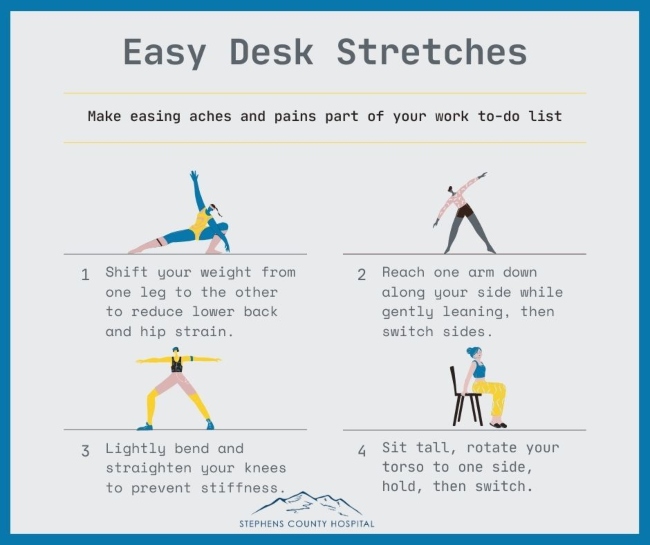
- Stand up and stretch.
- Roll your shoulders and gently rotate your wrists.
- Shift positions regularly.
- Take a brief walk.
Movement restores circulation and relieves muscle tension.
3. Stretch and Strengthen Every Day
Flexibility and strength protects joints and soft tissues.
- Stretch wrists, forearms, neck, and shoulders daily.
- Incorporate strengthening exercises for the core and upper body.
- Warm up before physical tasks or workouts.
- Avoid sudden increases in activity intensity.
Ongoing movement and conditioning helps to reduce the risk of overload.
4. Vary Your Movements
Repetition increases risk. Variety reduces it. Here's how you can add variety to your daily movements, even when your activities don't change:
- Alternate tasks when possible.
- Switch hands during repetitive activities.
- Use voice-to-text features instead of typing.
- Modify tools or grips to distribute pressure evenly.
Changing motion patterns gives your body time to recover.
5. Listen to Early Warning Signs
Pain is not something to push through.
If you notice discomfort in some area of your body, address it early by resting, icing, or modifying activity. Ignoring minor symptoms can lead to chronic inflammation or nerve compression.
Every Habits That Add Up
Repetitive strain doesn't just happen in the workplace. Consider how often you scroll on your phone, carry heavy bags on one shoulder, sleep with your wrist bent, or grip tools tightly for extended periods of tim.e
Making mindful adjustments in daily life can help protect your body long term.
Protect Your Long-Term Health
Repetitive strain injuries can develop in the background but have lasting consequences if you ignore them. You can reduce your risk of injury by paying attention to posture, taking breaks, strengthening your muscles, and responding early to anything that feels off.
If you're experiencing symptoms or want guidance on prevention, our Orthopedics and Rehabilitation departments are here to help. Our specialists can evaluate your concerns, create personalized treatment plans, and support your recovery so you can move comfortably and confidently every day.
Your body works hard for you. Take steps today to protect it for the future.